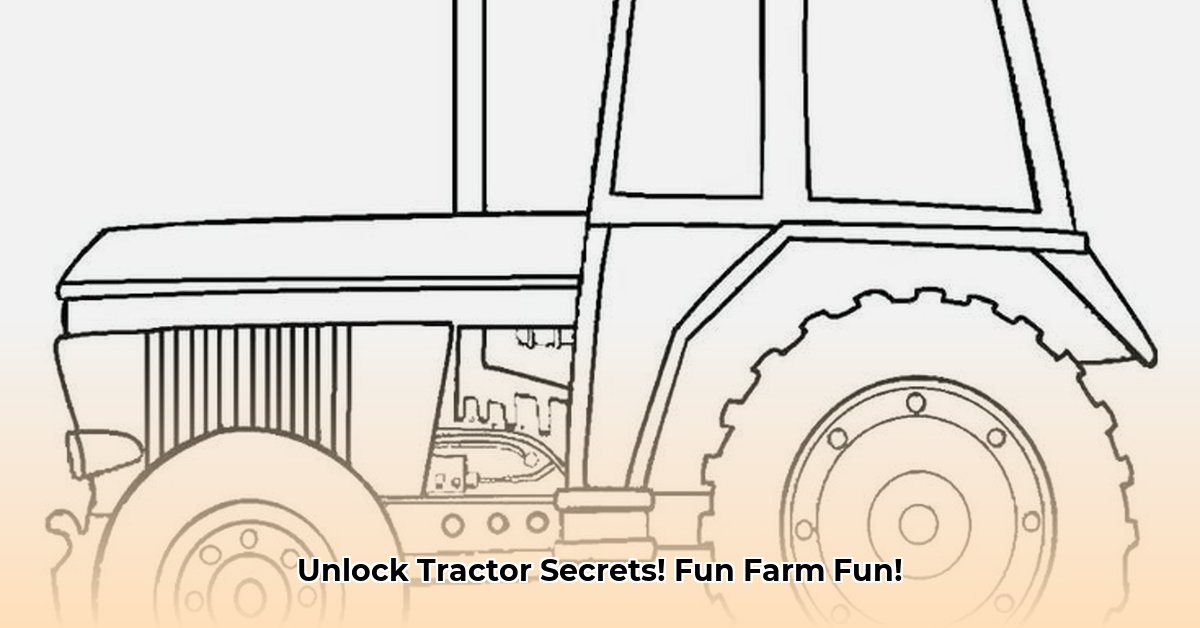
More Than Just Coloring: A Visual Journey into the World of Tractors
Who knew a simple tractor coloring page could be such a powerful learning tool? These aren't just kid's activities; they're surprisingly effective gateways to understanding agricultural technology, engineering, and even the broader food system. This article explores how readily available "tractor dibujo" (tractor drawings) can spark children's curiosity and foster a deeper appreciation for the machines that bring food from farm to table. We'll delve into the surprising educational value of these seemingly simple resources and explore ways to enhance their impact. For even more options, check out these free tractor coloring pages.
Visual Learning: A Powerful Engine for Young Minds
Children learn best through different methods, and visual learning is incredibly powerful, especially for younger children. Tractor coloring pages are visual goldmines. They're not merely pictures; they're mini-lessons disguised as fun. Kids can differentiate between wheeled tractors ideal for plowing fields and tracked tractors better suited for navigating challenging terrain. This subtle introduction to agricultural machinery connects the seemingly mundane tractor to the complex process of food production. It's a fun and accessible entry point into a world many children may not otherwise explore.
This visual engagement isn't just about rote memorization; it's about stimulating curiosity. A child might ask, "What's that big thing on the front?" This simple question opens doors to a wealth of learning opportunities, from field trips to farms, to searching for exciting tractor videos online, or even delving into captivating books about farming and agriculture. The possibilities are limitless! "It's amazing how a simple picture can lead to such rich conversations and further exploration," says Dr. Emily Carter, Professor of Early Childhood Education at the University of California, Berkeley.
From Crayons to Careers: Unlocking a World of Potential
The beauty of tractor drawing resources lies in their accessibility. Numerous websites offer free, printable pages, eliminating the need for expensive workbooks or apps. This democratizes learning, ensuring that children from diverse socioeconomic backgrounds can have access to this engaging educational experience. This ease of access contrasts sharply with potentially costly educational materials.
"The accessibility of these resources is key," explains Mark Olsen, a leading expert in agricultural education at Purdue University. "They remove financial barriers and make learning about tractors and agriculture possible for all children, regardless of their background."
Expanding Horizons: Enhancing the Learning Landscape
Tractor drawings serve as a springboard for deeper learning. We can significantly enhance their educational value by incorporating interactive elements. Imagine digital versions with engaging sound effects and animations showcasing tractors in action, or augmented reality (AR) apps that bring those drawings to life, transforming a simple coloring activity into an immersive learning experience. Educators can also seamlessly integrate these drawings into broader classroom lessons on agriculture, engineering, and technology.
Furthermore, enriching the learning experience doesn't always mean incorporating advanced technology. Linking coloring activities to real-world experiences, such as visits to farms or interactions with farmers, can significantly enhance understanding and contextualize the learning process. A structured approach, like designing simple models based on the tractor drawings or exploring the principles of engineering behind them, can further enrich the learning experience.
Cultivating Future Innovators: A Seed of Knowledge
Tractor coloring pages are more than just a fun pastime; they're a powerful tool that can ignite a lifelong passion for agriculture and technology. These readily available resources provide a unique opportunity to introduce children to these critically important fields, potentially inspiring the next generation of agricultural and engineering innovators. These simple, accessible resources serve as the perfect gateway to understanding the fascinating world of farming and its vital role in our society. Let's encourage children to learn and grow—one tractor drawing at a time.
How to Use Tractor Coloring Pages for Effective Agricultural Technology Education
Key Takeaways:
- Tractor coloring pages offer a unique and effective way to introduce children to agricultural technology.
- Visual learning enhances understanding, especially for younger learners.
- These pages can spark engaging conversations about farming, technology, and food production.
- Free and readily-available resources make learning accessible to everyone.
- Enriching activities and experiences further enhance their educational value.
Tractors: Beyond Simple Coloring Fun
Tractor coloring pages provide a unique opportunity to teach children about different types of tractors and their roles in agriculture. For example, discuss the differences between wheeled and tracked tractors, highlighting their varied applications and suitability for specific terrains. This allows children to connect the image with the real-world functionality of the machine. Do you know that tracked tractors are better suited for muddy or uneven terrain than wheeled tractors? That’s a great conversation starter!
Understanding the Farm-to-Table Connection
Use the coloring activity as a springboard to discuss the entire food production process. How does a tractor help a farmer grow food? What happens after the harvest? These are crucial questions that establish a clear connection between the tractor in the picture and the food on their plates. This holistic approach strengthens their understanding of agricultural processes and the significance of technology in food production.
Extending the Learning Experience
Don't limit the learning to just coloring. Research different types of tractors together. Plan a virtual or in-person visit to a farm. Even engaging in a simple online search for tractor videos can transform the experience from a passive coloring activity into an active and engaging learning process.
Accessibility and Affordability: A Key Advantage
The best part? The resources are freely accessible online. You don't need expensive workbooks or complex kits – just readily available printable materials and a child's imagination. This makes learning accessible irrespective of economic status, ensuring that all children can benefit from this engaging learning experience.
Limitations and Expansions
While coloring pages offer a simplified view, they provide a phenomenal starting point. Consider complementing the activity with digital interactive resources, videos, virtual tours, or even engaging games that strengthen children’s understanding. Augmented reality (AR) apps could potentially supercharge the experience even further, creating a truly immersive learning environment.